
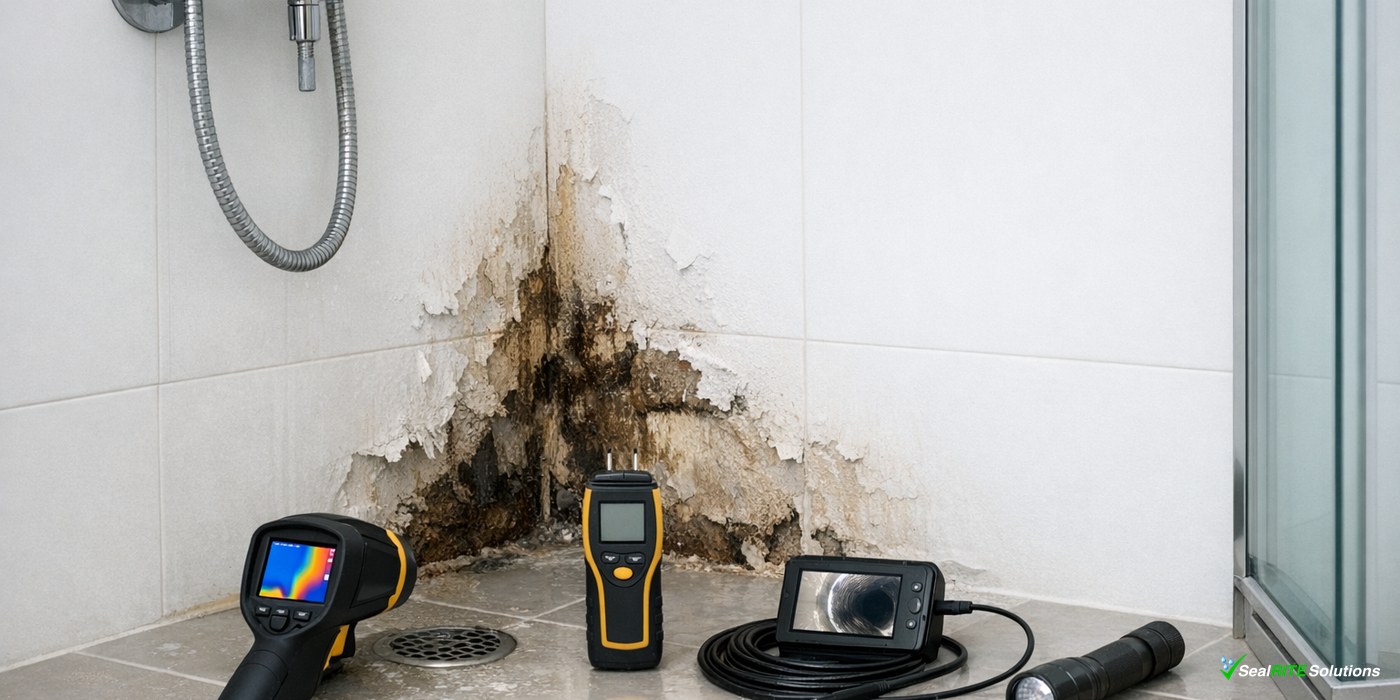
A leaking shower is one of those problems that’s easy to ignore — until you can’t. What starts as a damp patch or a musty smell can quietly turn into structural damage, mould growth, and costly repairs. If you’ve noticed signs of a leak, you’re not alone. It’s one of the most common issues we see in homes across Sydney.
So what’s actually causing your shower to leak? Let’s break it down.
1. Failed or Deteriorated Waterproofing
Waterproofing membranes don’t last forever. Over time — especially in older homes — the membrane beneath your tiles can crack, shrink, or simply wear out. Once that barrier is compromised, water finds its way through to the substrate and into the walls or ceiling below. This is often the root cause of leaks that seem to come from nowhere.
2. Cracked or Missing Grout
Grout is the mortar that fills the joints between your tiles. It takes a beating every single day — hot water, soap, scrubbing, and constant expansion and contraction from temperature changes. Over time, silicone-shower”>grout cracks, crumbles, or washes away entirely. Those gaps become a direct pathway for water to seep behind the tiles.
The good news? Regrouting is one of the more straightforward fixes — but it needs to be done properly to actually stop the leak.
3. Silicone Seal Breakdown
Look at the corners and edges of your shower — where the wall meets the floor, or where tiles meet the shower screen. That flexible sealant is silicone, and it plays a critical role in keeping water where it belongs. When silicone cracks, peels, or goes mouldy and is scraped away, water infiltrates through those seams.
Replacing silicone is a quick fix on its own, but if you’ve had an ongoing leak, there may be water damage already hiding in the walls that needs to be addressed.
4. Poor Original Installation
Unfortunately, not all bathroom work is done to a high standard. Incorrect falls (the gradient of your shower floor), inadequate waterproofing coverage, or tiles laid without proper backing can all lead to chronic leak issues. If your shower has been problematic since it was built or renovated, the issue may be structural.
5. Cracked Tiles
A cracked tile isn’t just cosmetic. Any fracture in the tile surface is a potential entry point for water — particularly on the floor where constant foot traffic applies pressure. Even a hairline crack can allow water to permeate through to the waterproofing layer below.
So What Should You Do?
The first step is a proper diagnosis. Many leak issues aren’t visible to the naked eye, which is why SealRITE Solutions uses thermal imaging and video inspection technology to identify the exact source and extent of the problem before any work begins.
From there, the right repair approach depends on what’s causing the leak. A small silicone replacement is very different from a full re-waterproofing job — and you shouldn’t be paying for more than you need.
The Bottom Line
Don’t wait for the problem to get worse. Leaks that are left untreated tend to cause far more expensive damage over time — to the structure of your bathroom, to the room below, and in some cases to the building’s framework itself.
If your shower is showing signs of a leak — water stains, soft walls, mould around the base, or a persistent damp smell — get in touch with the SealRITE team. We’ve been solving Sydney’s shower and bathroom leak problems for over 30 years, and we’ll tell you exactly what’s going on before we recommend anything.
Call us on 1300 123 008 or book a free inspection online at sealritesolutions.com.au