
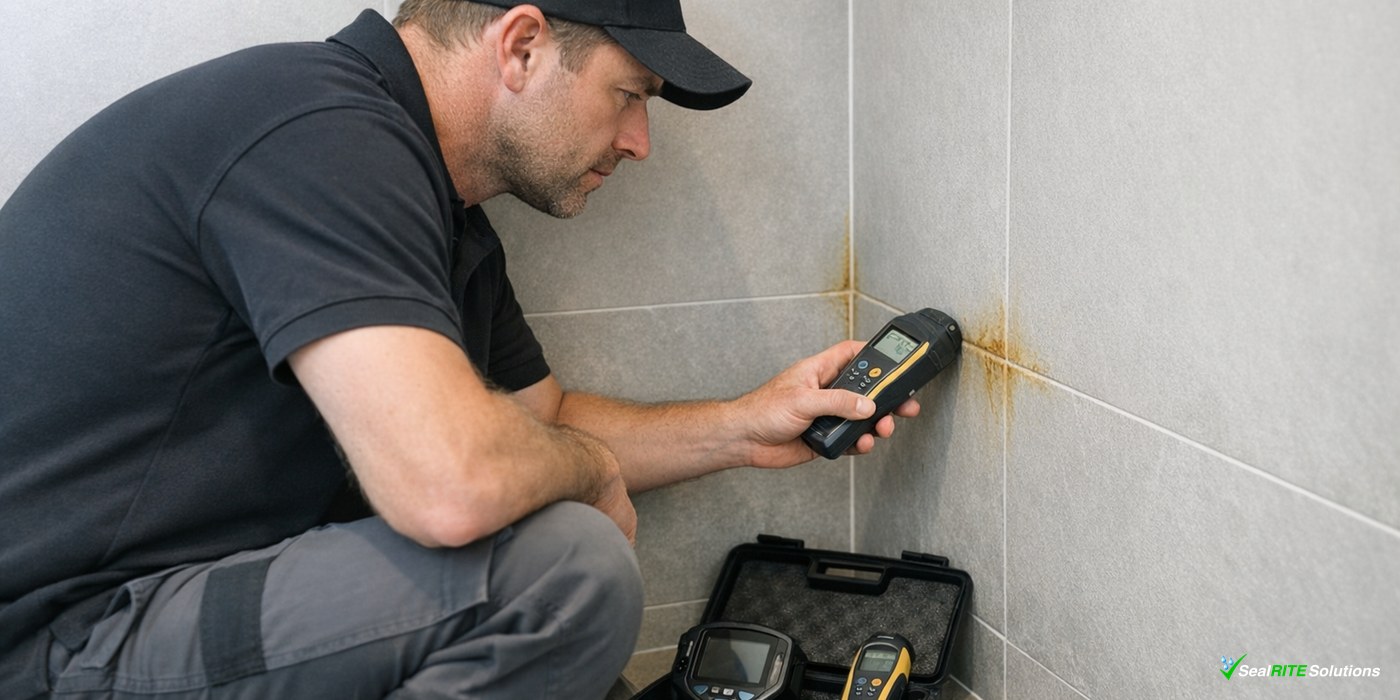
Shower leaks can be sneaky. By the time there’s visible water damage, the problem has often been building for months — quietly working its way through grout, silicone, and waterproofing membranes. Catching it early saves you time, money, and a whole lot of stress.
Here are seven warning signs that your shower may have a leak — even if you haven’t seen any water pooling on the floor.
1. Mould or Mildew Around the Base of the Shower
A little surface mould is normal in any bathroom — it thrives in warm, moist environments. But if you’re seeing persistent black or grey mould that keeps returning even after cleaning, or mould appearing in places that shouldn’t stay wet (like the lower wall outside the shower), that’s a red flag.
2. Soft, Spongy, or Discoloured Walls
Press gently on the wall next to or behind your shower. Does it feel soft or springy? Can you see discolouration, bubbling paint, or peeling wallpaper on the other side of the wall? These are signs that water has been getting through and saturating the wall cavity.
3. A Persistent Damp or Musty Smell
Your bathroom should smell fresh after a ventilated shower. A lingering musty odour — especially one that doesn’t go away — often signals moisture trapped somewhere it shouldn’t be. That moisture is likely feeding mould or mildew you can’t see.
4. Cracked, Loose, or Missing Grout
Take a close look at the grout lines in your shower. Are there cracks? Does any grout feel loose when you press it? Are there gaps where grout has washed away entirely? Every break in the grout line is a potential entry point for water behind the tiles.
5. Staining or Watermarks on the Ceiling Below
If your shower is on an upper floor, a leaking shower will eventually show up as water stains or dampness on the ceiling of the room below. By the time this is visible, the leak has typically been active for a while. Don’t dismiss it as condensation — get it inspected.
6. Silicone That’s Cracked, Peeling, or Discoloured
The silicone seals in the corners and edges of your shower are designed to flex with temperature changes. Over time they can crack, peel away from the surface, or become so mould-affected that they lose their integrity. A compromised silicone seal is one of the most common — and most overlooked — entry points for water.
7. Tiles That Sound Hollow or Feel Loose
Tap on your shower tiles with your knuckle. Do any of them sound hollow? A hollow sound suggests the tile has separated from the substrate beneath, which can happen when moisture has worked its way in and weakened the adhesive. Loose or rocking tiles are even more serious and need attention quickly.
What To Do If You Notice These Signs
Don’t ignore them — and don’t try to mask them with a fresh bead of silicone and hope for the best. A proper assessment will tell you what’s actually happening beneath the surface, so you can make an informed decision about repairs.
At SealRITE Solutions, we use thermal imaging and video inspection to diagnose leaks without removing tiles. You’ll receive a clear written report and quote before any work begins — no surprises.
Call 1300 123 008 or visit sealritesolutions.com.au to book your free inspection today.