
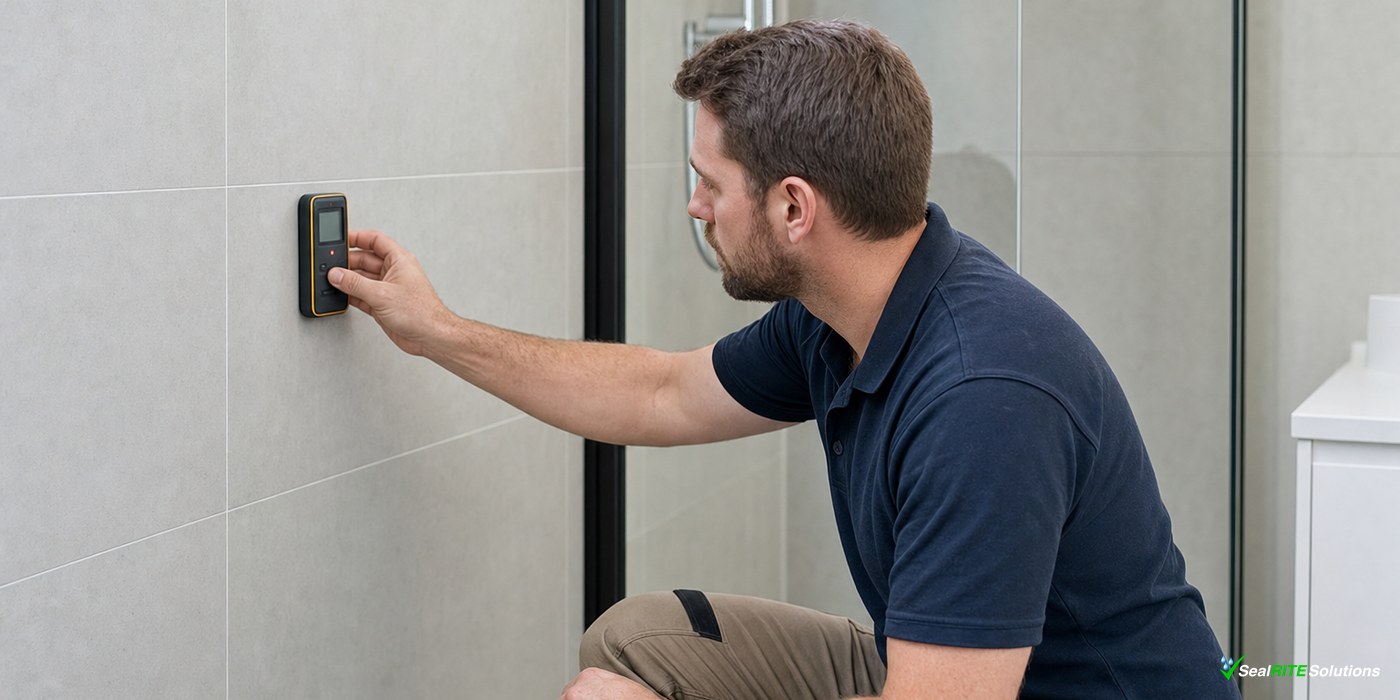
A leaking shower rarely announces itself with a flood. More often, it starts with subtle signs: a faint musty smell, a loose tile, or a small water stain on the ceiling below. Left unchecked, that small leak can rot timber framing, damage plasterboard, and spread mould through wall cavities. In Sydney homes, where bathrooms are often on upper floors or built into tight spaces, the damage can extend well beyond the shower itself. This guide covers the 10 most common shower leak warning signs every Sydney homeowner should know, what each sign means, and when to call a professional.
1. Water Stains on the Ceiling Below
If your bathroom is on an upper floor and you notice a brownish or yellowish stain on the ceiling directly below, this is one of the most reliable shower leak warning signs. The stain may appear small at first, but it indicates water has already penetrated through the flooring and is pooling on the ceiling cavity.
What to look for
Check the ceiling of the room directly beneath your bathroom. Look for discolouration, bubbling paint, or sagging plasterboard. The stain may feel damp to the touch, or it may have dried and left a watermark ring.
What it means
Water is escaping the shower floor or walls and travelling downward. This typically indicates a failure in the waterproofing membrane or a leak at the waste pipe connection. The volume of water needed to produce a visible ceiling stain is significant, so the problem has likely been developing for weeks or months.
2. Loose or Hollow-Sounding Tiles
Tiles that move underfoot, sound hollow when tapped, or have started to lift from the floor are a strong indicator of water damage beneath the surface. When water seeps through failed grout or a cracked membrane, it can dissolve the tile adhesive, causing tiles to detach from the substrate.
What to look for
Walk across your shower floor and bathroom tiles. Listen for a hollow sound when you tap tiles with a coin or your knuckle. Check if any tiles are visibly raised, cracked, or shifting.
What it means
Loose tiles suggest the adhesive bond has been compromised by moisture. In many cases, this is a sign that the waterproofing membrane underneath has failed and water is saturating the bed beneath the tiles. A few loose tiles may be repairable, but widespread hollow spots often require more extensive work.
3. Persistent Musty or Damp Smells
A musty, earthy odour in your bathroom that does not disappear with cleaning is a classic shower leak warning sign. The smell is caused by mould and mildew growing in damp, poorly ventilated spaces, often inside wall cavities or beneath the shower base.
What to look for
Pay attention to the smell when you first enter the bathroom, especially after it has been closed up overnight. The odour may be strongest near the shower area or along the skirting boards. It may also be noticeable in the room adjacent to the bathroom.
What it means
A persistent musty smell indicates ongoing moisture. The water may be trapped behind tiles, in the shower base, or within the wall framing. Because the source is hidden, the mould growth can become extensive before it is discovered. This is a sign that should prompt a professional inspection.
4. Rising Damp or Efflorescence on Walls
Rising damp appears as a tide mark or dark stain on the lower portion of walls, particularly on walls adjacent to or shared with the shower. Efflorescence, a white powdery residue, forms when water carries salts through masonry or grout and deposits them on the surface as the water evaporates.
What to look for
Inspect the lower 300mm of walls near the shower. Look for dark staining, bubbling paint, peeling wallpaper, or a white, chalky powder on brick or grout surfaces. Tap the wall gently; damp plasterboard loses its rigidity and may feel soft.
What it means
Water is migrating horizontally through the wall structure from the shower area. This may be caused by failed grout lines, a breached waterproofing membrane, or a leaking pipe within the wall. The damage can extend into adjoining rooms, affecting skirting boards, carpet, and wall framing.
5. Cracked, Crumbling, or Missing Grout
Grout is the first line of defence against water penetration in a tiled shower. When grout cracks, crumbles, or falls out entirely, water can seep directly into the substrate beneath the tiles. Even small gaps can allow a surprising amount of water through over time.
What to look for
Examine all grout lines in your shower floor and walls. Look for hairline cracks, sections of grout that have turned powdery, or gaps where grout is missing. Pay special attention to the corners where walls meet the floor and where the floor meets the waste drain.
What it means
Deteriorated grout means water has a direct path past the tile surface. If the waterproofing membrane beneath is intact, the water may still be contained. However, if both the grout and the membrane have failed, water is soaking into the building structure. In some cases, regrouting may be sufficient to address the problem before it escalates.
6. Peeling Paint or Bubbling Plaster
Paint that is peeling, bubbling, or blistering on bathroom walls or ceilings is a clear sign of moisture ingress. The water vapour trapped behind the paint film forces it to separate from the surface.
What to look for
Check walls and ceilings both inside the bathroom and in adjacent rooms. Look for paint that has lifted from the surface, formed bubbles, or turned soft and gummy. Pay particular attention to the ceiling directly above the shower and the wall behind the shower head.
What it means
Peeling paint indicates that moisture is present within the wall or ceiling. In bathrooms, this is often caused by steam penetration if the bathroom is poorly ventilated, but it may also signal a leaking shower that is saturating the wall cavity from behind.
7. Water Pooling on the Floor Outside the Shower
If you find water pooling on the bathroom floor outside the shower after use, the shower screen, door seal, or the fall of the shower floor may be failing. While this may seem like a minor annoyance, persistent water outside the shower can damage the bathroom floor and migrate into adjoining rooms.
What to look for
After using the shower, check the bathroom floor for water. Note where the water collects and whether it appears after every shower or only occasionally. Inspect the shower screen seals, door sweeps, and the joint between the shower base and the floor.
What it means
Water escaping the shower enclosure may be due to worn door seals, an improperly installed shower screen, or a shower floor that does not slope correctly toward the waste. If the bathroom floor is not waterproofed, this water can cause damage to the subfloor and ceilings below.
8. Unexplained Increase in Water Bills
A sudden or gradual increase in your water bill without a corresponding increase in usage can be a sign of a hidden leak, including a leaking shower. Even a slow drip from a failed shower tap or pipe fitting can waste thousands of litres of water over a billing period.
What to look for
Compare your current water bill with the same period last year. If usage has increased by 10 per cent or more with no obvious explanation, investigate further. Sydney Water provides usage data on your bill that can help you spot unusual patterns.
What it means
A hidden leak somewhere in your plumbing is losing water continuously. This may be a leaking shower tap, a failed pipe joint within the wall, or a leak in the hot water system. A licensed plumber can perform a leak detection test to isolate the source.
9. Mould Growth on Walls, Ceilings, or Silicone Seals
Mould in a bathroom is not just a cosmetic issue. It indicates that moisture levels are consistently high enough to support fungal growth. While some surface mould is common in poorly ventilated bathrooms, mould that returns quickly after cleaning or appears in new locations suggests an ongoing moisture source.
What to look for
Check for black, green, or grey patches on grout, silicone seals, ceilings, and walls. Look behind shampoo bottles and in corners where airflow is limited. Mould growing on the silicone around the shower base is particularly concerning.
What it means
Mould growing on silicone seals suggests water is trapped behind the seal or the seal has failed and water is penetrating. Mould on walls or ceilings away from the shower may indicate water travelling through the wall cavity. In addition to structural damage, mould can cause respiratory issues, particularly for people with asthma or allergies.
10. Damp or Stained Carpet Near the Bathroom
If your bathroom adjoins a carpeted hallway or bedroom, the carpet near the doorway or along the shared wall may show signs of water damage. Carpet acts like a wick, drawing moisture from the affected area and spreading it further.
What to look for
Check the carpet adjacent to the bathroom. Look for dark stains, a damp feeling underfoot, or a musty odour from the carpet. Lift a corner of the carpet if possible to inspect the underlay and subfloor beneath.
What it means
Water from the bathroom is migrating into the adjoining room. By the time carpet is visibly affected, the water damage is often well advanced. The underlay may be saturated, and the subfloor may have begun to rot. This typically requires both bathroom repair and flooring replacement.
DIY Check vs Professional Inspection
Knowing when to check things yourself and when to call a professional can save you both time and money. The table below outlines the key differences.
| Factor | DIY Check | Professional Inspection |
|---|---|---|
| Cost | Free | Typically $150 to $350 for a standard inspection |
| Accuracy | Limited to visible signs only | Uses moisture meters, thermal imaging, and inspection cameras |
| Best for | Ongoing monitoring and early detection of obvious signs | Confirming suspected leaks, locating the source, and assessing damage extent |
| Limitations | Cannot detect leaks within walls or under floors | May require minor access holes for camera inspection |
| When to use | Monthly visual checks as part of home maintenance | When any of the 10 warning signs are present |
When to Call a Professional
If you have identified one or more of these warning signs, a professional shower leak detection service can pinpoint the exact source and extent of the leak. Modern diagnostic tools, including moisture meters and thermal imaging cameras, can locate leaks behind tiles and within walls without the need for exploratory demolition. The Australian Institute of Waterproofing recommends that any suspected shower leak be assessed by a qualified waterproofing professional, as delays in addressing the issue typically lead to more extensive and costly repairs.
In some cases, if the leak is caught early and the damage is limited to the grout and surface, regrouting may be sufficient to restore the shower’s water resistance. However, if the waterproofing membrane has failed or the substrate is damaged, a more substantial repair or even a full bathroom renovation may be required to prevent ongoing structural damage.
Questions Sydney Homeowners Ask About Shower Leaks
Q: How long can I wait before fixing a shower leak?
A: The short answer is that you should not wait at all. A shower leak does not self-correct. Every day that water continues to escape, it is penetrating further into the building structure. What might start as a $400 regrouting job can become a $6,000 waterproofing replacement if the leak is left to saturate the substrate. In multi-storey homes, water can travel through the floor cavity and damage ceilings, electrical wiring, and timber framing in the rooms below. The cost of a professional inspection is typically far less than the cost of the damage that accumulates while waiting. If you have noticed any of the warning signs above, arranging an inspection promptly is the most cost-effective course of action.
Q: Will my home insurance cover shower leak damage?
A: Home and contents insurance policies vary considerably between providers, and coverage for water damage from shower leaks is not guaranteed. Many policies cover sudden and accidental water damage, such as a burst pipe, but may exclude damage caused by gradual leaks or a failure to maintain the property. The Insurance Council of Australia notes that gradual water damage is one of the most common exclusions. You should check your specific policy wording and speak with your insurer directly. If the leak is the result of a building defect, you may also have rights under NSW home building laws, particularly if the bathroom was built or renovated within the statutory warranty period.
Q: Can a shower leak cause structural damage to my home?
A: Yes, a shower leak can absolutely cause structural damage if left unaddressed. Water that penetrates the bathroom floor can rot timber joists and bearers, corrode metal fixings, and weaken the subfloor. In brick and concrete construction, persistent water ingress can cause reinforcing steel to rust and expand, leading to concrete spalling. The damage is often hidden from view until it is advanced, because the water travels through the building structure before becoming visible. In severe cases, structural repairs may be required in addition to the bathroom waterproofing work, which can significantly increase the total cost of remediation.
Helpful Australian Resources
- NSW Fair Trading provides guidance on home building and renovation rights, including information about waterproofing standards and how to verify a contractor’s licence. You can check a builder’s licence number online through the Service NSW website.
- Australian Institute of Waterproofing is the peak industry body for waterproofing professionals in Australia. Their website offers technical resources and guidance on waterproofing standards including AS 3740, the Australian Standard for waterproofing of domestic wet areas.
- Standards Australia publishes AS 3740, which sets out the minimum requirements for waterproofing in bathrooms, laundries, and other wet areas in residential buildings. Compliance with this standard is mandatory under the National Construction Code.
Protect Your Sydney Home from Shower Water Damage
If you have noticed any of these shower leak warning signs in your Caringbah, Sutherland Shire, or wider Sydney home, the team at SealRITE Solutions can help. We offer professional shower leak detection using moisture meters and thermal imaging to locate the source of the leak without unnecessary demolition. Our NSW licence (302767C) and membership with the Australian Institute of Waterproofing reflect our commitment to quality workmanship and compliance with Australian Standards.
Call SealRITE Solutions on 1300 123 008 to arrange a shower leak inspection. We service all Sydney areas, including the Eastern Suburbs, Sutherland Shire, and Western Sydney.
Disclaimer: This information is general in nature and does not constitute professional building advice. Waterproofing requirements vary based on individual circumstances. Consider seeking independent advice before making repair decisions.