
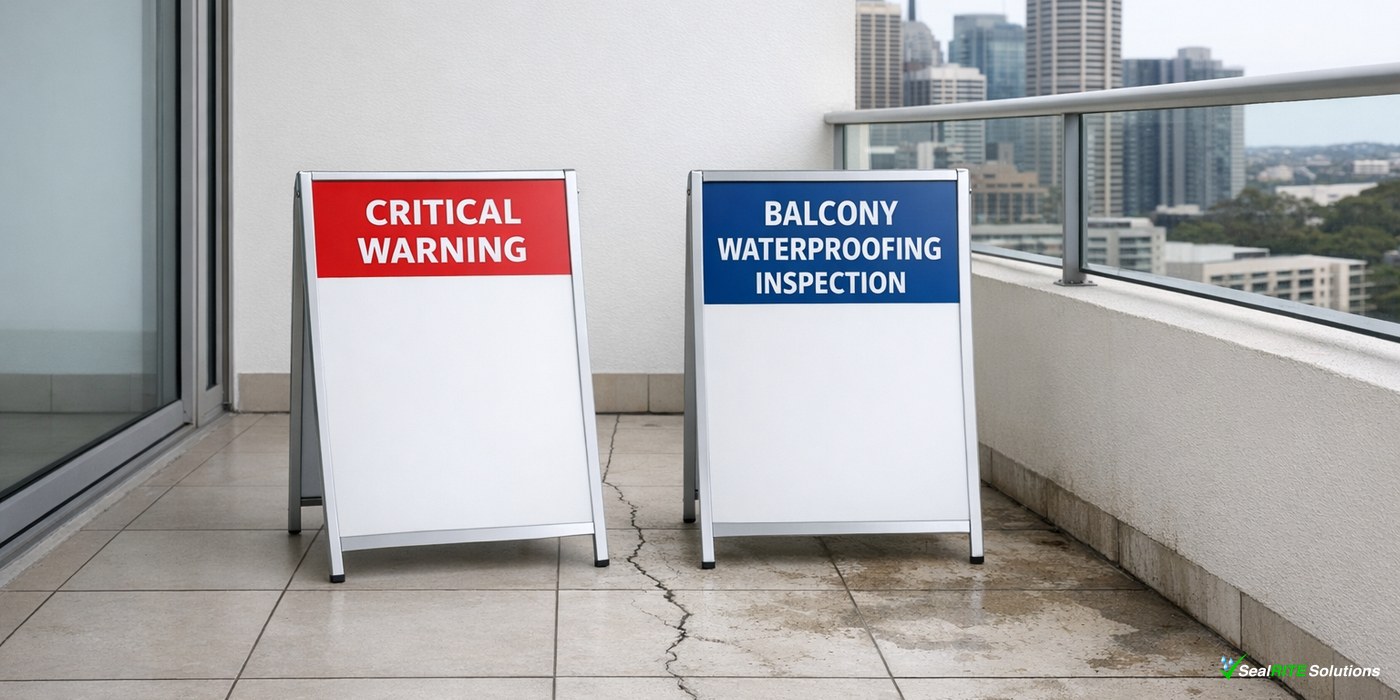
Your balcony is one of the hardest-working parts of your home. It’s exposed to full sun, wind, and rain year-round, and it’s constantly dealing with foot traffic, temperature fluctuations, and the expansion and contraction that comes with them. Over time, even a well-built balcony will show signs of wear — and when it comes to waterproofing, the warning signs are worth knowing.
Catching a balcony waterproofing issue early is critical. Water that penetrates a balcony can damage the structural slab, affect the room or ceiling below, and in strata or apartment buildings, cause disputes between owners. Here’s what to look out for.
1. Water Staining or Damp Patches on the Ceiling Below
This is the most obvious sign — but also the one that tends to appear after the problem has been active for some time. If you’re noticing watermarks, discolouration, or active dripping on the ceiling beneath your balcony, the waterproofing membrane has almost certainly failed. The damage may already extend beyond what’s visible.
2. Cracked or Deteriorating Grout and Tiles
Balcony tiles are exposed to far more extreme conditions than indoor tiles. Thermal expansion and contraction — the daily cycle of heating and cooling — causes tiles and grout to flex constantly. Over time, grout cracks and tiles can lift or crack at the edges. Each break is a potential water entry point. If you can see cracks or gaps in the grout, it’s time for an inspection.
3. Rust Staining
Rust staining on a balcony — particularly around fixings, balustrade posts, or drain surrounds — is a sign that water has been penetrating the surface and reaching steel reinforcement or fittings beneath. This is a serious issue. Steel corrosion inside a concrete structure causes it to expand, which can lead to spalling (concrete cracking and breaking away). Left untreated, this becomes a structural problem.
4. Efflorescence (White Powdery Deposits)
Efflorescence is the white, chalky residue that sometimes appears on concrete or masonry surfaces. It’s caused by water carrying soluble salts to the surface as it moves through the material. While efflorescence itself is harmless, it’s a reliable indicator that water is moving through the substrate — which means waterproofing has been compromised.
If you’re seeing white deposits on the underside of your balcony, on the walls beneath it, or on the edge of the slab, it’s worth investigating.
5. Pooling Water After Rain
A properly waterproofed balcony is designed with a fall — a slight gradient that directs water toward the drain. If water is pooling in areas away from the drain after rain, the surface level may have shifted, or the drain may be partially blocked. Pooling water dramatically increases the pressure on the waterproofing membrane and accelerates wear.
What Happens If You Leave It?
Balcony waterproofing issues don’t self-resolve. Water will continue to find the path of least resistance, and the longer it’s left, the more damage accumulates. What starts as a cracked grout line can progress to:
- Water damage to the room or ceiling below
- Structural damage to the concrete slab
- Mould growth inside wall cavities
- Costly strata disputes or insurance complications
The earlier you catch and address a balcony waterproofing issue, the less invasive and expensive the repair will be.
Getting a Professional Assessment
SealRITE Solutions provides expert balcony leak detection and repair across Sydney. Our licensed assessors use thermal imaging technology to identify exactly where water is entering, so there are no guesses and no unnecessary demolition. You’ll receive a detailed written report and quote before we do anything.
If your balcony is showing any of the signs above — or you simply haven’t had it inspected in a few years — get in touch. Early action protects your property and your peace of mind.
Call 1300 123 008 or book online at sealritesolutions.com.au