
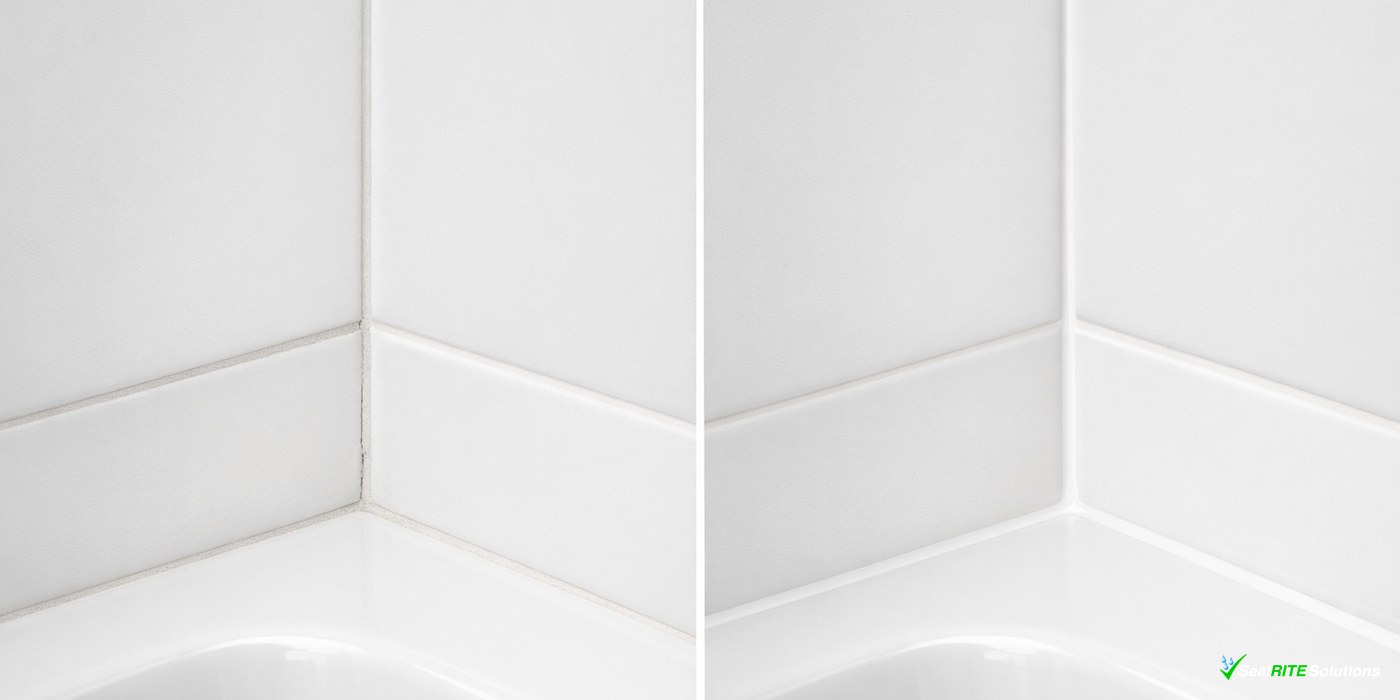
If you’ve ever looked closely at your shower, you’ll notice two different types of filler between the tiles and surfaces. There’s the hard, matte material filling the joints between tiles — that’s grout. And there’s the flexible, rubbery strip in the corners and along the edges — that’s silicone. They look similar to the untrained eye, but they serve very different purposes and fail in very different ways.
Understanding the difference can help you spot problems early and have a more informed conversation with your tradesperson.
What Is Grout?
Grout is a cement-based (or epoxy-based) compound used to fill the joints between tiles. While it does serve an aesthetic purpose — giving tiled surfaces a clean, finished appearance — it also plays an important functional role: helping to prevent water from getting behind the tiled surface and reaching the substrate or waterproofing membrane beneath. It’s hard, rigid, and designed to withstand the constant moisture, heat, and cleaning of a bathroom environment.
Over time, grout can crack, crumble, discolour, or be eroded by harsh cleaning products. When grout fails, water can penetrate behind the tiles and reach the waterproofing membrane — or bypass it entirely if the membrane has also degraded.
What Is Silicone?
Silicone is a flexible sealant used wherever two surfaces meet at a change of plane — corners, the junction between floor and wall, the edge of a shower screen, or where tiles meet a bath. Its flexibility is the key. Unlike grout, silicone is designed to absorb the constant movement and expansion that happens as materials heat and cool.
Because it’s flexible and waterproof, silicone is the last line of defence at the most vulnerable points in your shower. When it cracks, peels, or becomes saturated with mould, those joints become prime entry points for water.
A Common Mistake: Using Grout in Silicone Zones
One of the most frequent installation errors we see is grout being used in corners and change-of-plane joints where silicone should be. Because grout is rigid, it can’t handle the natural movement of the building. It cracks — often within months — and the joint opens up. Water gets in, and the problem begins.
The Australian Standard AS 3740 (Waterproofing of Domestic Wet Areas) actually specifies that silicone must be used in these movement joints, not grout. When we see grout in corners during an inspection, it’s a tell-tale sign of substandard workmanship.
Epoxy Grout vs Standard Cement Grout
Not all grout is equal. Standard cement grout is porous and absorbs water over time. Epoxy grout, by contrast, is non-porous, highly durable, and far more resistant to staining and water penetration. It’s the premium choice for wet areas and is what SealRITE uses on repair and renovation jobs.
If your shower currently has cement grout, replacing it with epoxy grout during a regrout will significantly improve its longevity and resistance to future moisture issues.
When Do They Need Replacing?
Grout should be inspected every few years and regrouted when you see cracking, crumbling, discolouration that won’t clean off, or gaps appearing between tiles. Silicone typically lasts 5–10 years before it starts to degrade, and should be replaced as soon as you see cracking, peeling, or persistent mould that won’t clean away.
Both are far cheaper to replace proactively than to deal with the water damage that follows when they’re left too long.
Need a Professional Assessment?
Not sure if your grout or silicone is causing a problem? SealRITE Solutions provides thorough shower inspections across Sydney, using thermal imaging to find moisture issues that aren’t visible to the eye. We’ll tell you exactly what’s going on and what needs to be done.
Call 1300 123 008 or visit sealritesolutions.com.au to book your free inspection.